en
en bel
bel de
de fil
fil fin
fin fra
fra hi
hi id
id it
it jp
jp kor
kor nl
nl pl
pl pt
pt swe
swe tr
tr
This report combines engineering insights, supply-chain analysis, and AR/XR optical trends to explain why AMOLED modules in the 1–2 inch class—long used in wearables—are now scaling into AR smart glasses, monocular HUDs, industrial helmets, medical scopes, and next-generation optical modules.
On This Page:
1. Introduction: The Rise of Ultra-Compact AMOLED in AR/XR Devices
AR/XR systems rely heavily on projection optics: waveguides, birdbath optics, freeform combiners, and micro-prisms. To achieve lightweight devices, the display must be:
Small enough to fit into optical modules
Bright enough to overcome optical losses
High-contrast for dark environments
Low-power for all-day wear
Flexible in interface (MIPI/SPI) for integration
This makes 1–2 inch AMOLED modules particularly attractive. These displays deliver:
True black with pixel-level emission
Thin form factor (<1 mm possible)
High color saturation for AR content
Fast response (<1 ms)
Wide viewing angles needed for optical engines
Key insight: The AR/XR industry is not just adopting AMOLED — it is depending on it for optical engine miniaturization in 2025–2027.
2. Global AR/XR Market Drivers (2025–2027)
2.1 Consumer AR glasses: the biggest accelerator
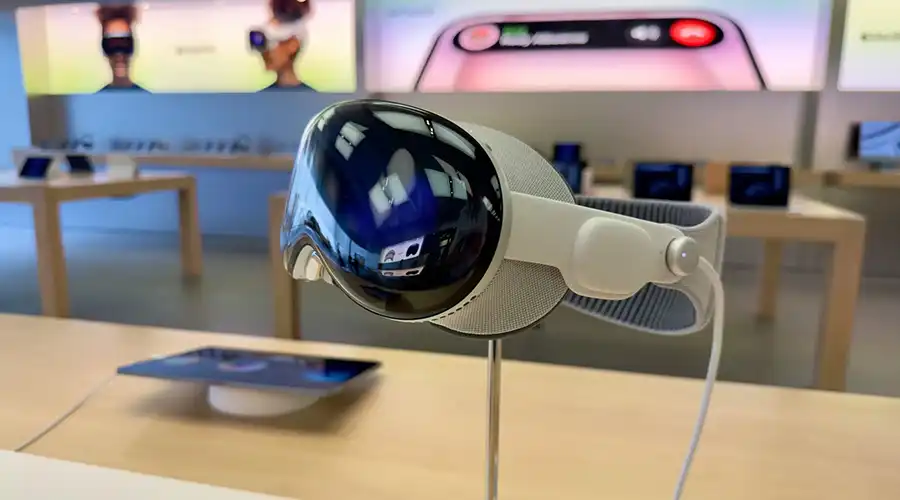
Companies including Apple, Meta, Samsung, OPPO, and Huawei are pushing lightweight consumer AR glasses. These devices require displays smaller than smartphone screens but far better than smartwatch PMOLEDs.
2.2 Industrial AR/XR: stable, high-growth B2B demand
Manufacturing (assembly guidance)
Oil & gas (hazard inspection)
Logistics (hands-free picking)
Medical surgery & visualization
2.3 Optical engines need higher contrast than LCD can provide
≥ 500–1,000 nits input brightness
Extremely high contrast ratio
Sub-pixel precision
AMOLED meets these requirements naturally; LCD needs larger backlights and adds bulk.
2.4 Supply Chain Shift: AMOLED Goes Small — and Strategic
Between 2017 and 2022, AMOLED manufacturing was overwhelmingly geared toward smartphones, with panel sizes locked in the 5–7 inch sweet spot. But by 2024–2025, a pivotal shift unfolded: display makers began retooling LTPS/AMOLED production lines to support a new wave of compact formats—precisely tailored for next-gen wearables:
1.04"
1.32"
1.39"
1.8"
2.0"
2.4"
This newfound supply chain agility has unlocked high-brightness, low-power, ultra-fast AMOLED panels at the exact scales AR/XR demands. As a result, developers are rapidly abandoning legacy LCD modules in favor of AMOLED—not just for performance, but because it’s finally available at scale in the right sizes.
3. Why 1–2 Inch AMOLED Displays Are Perfect for AR/XR Devices
The AR/XR industry has entered a stage where display modules must be small, bright, thin, power-efficient, and capable of delivering premium image quality through complex optical paths. 1–2 inch AMOLED displays provide an ideal balance between optical performance, size, cost, and power consumption.
3.1 Ultra-High Contrast: Critical for Waveguides & Dark Environments
True black (0 cd/m²) when pixels are off
1,000,000:1 contrast ratio typical for AMOLED
Sub-pixel precision for AR content overlays
This is something LCD physically cannot achieve because:
Backlight leakage raises black levels
Polarizer + waveguide adds additional haze
Contrast drops significantly off-axis
Conclusion: Without true black, AR overlays appear washed out. This alone pushes most AR developers toward AMOLED.
3.2 Ultra-Thin Form Factor Enables Smaller Optical Engines
0.6–1.1 mm thickness (glass encapsulation)
0.3–0.5 mm thickness (TFE flexible encapsulation)
3.3 Ultra-Fast Response Time (<1 ms)
AMOLED excels with natural response times in the microsecond to sub-millisecond range. LCD requires additional overdrive compensation and still struggles to match this.
3.4 Better Color and Viewing Angles for Optical Combiners
AMOLED’s naturally wide viewing angles (≈ 170°) allow:
More consistent color after optical losses
Better alignment with waveguide input apertures
Reduced rainbowing or color shifts
3.5 Energy Efficiency — Essential for All-Day Wear
Dark UI consumes significantly less power
Peak power only occurs on bright content
For AR UI (typically dark background + neon outlines), AMOLED can save 30–60% power compared to LCD.
3.6 Perfect Size Range for AR Optical Engines
0.7–1.5 inches (consumer AR)
1.2–2.0 inches (industrial AR)
This matches the AMOLED module supply range perfectly. LCD is too bulky in 1–2 inch sizes, and MicroLED is still extremely expensive and low-volume.
| Feature | 1–2” AMOLED | 1–2” TFT LCD | MicroLED Microdisplay |
|---|---|---|---|
| Contrast | Excellent (true black) | Poor–Average | Excellent |
| Brightness | 500–1,200 nits (typ.) | 400–1,000 nits | 3,000–10,000+ nits |
| Power Consumption | Very low on dark UI | Always high (backlight always on) | Moderate–High |
| Thickness | 0.3–1.0 mm | 1.5–2.5 mm | 0.1–0.3 mm |
| Maturity & Cost | High maturity, stable cost | High maturity, low cost | Very expensive / low yield |
| Availability (2025) | Mass production | Mass production | Early stage / limited supply |
Conclusion: MicroLED is the future, but AMOLED is the practical solution today in AR/XR.
4. Optical Requirements: Why AMOLED Matches AR Engine Designs
4.1 Input Brightness (Nits) vs Waveguide Efficiency
Birdbath optics loss: 40–55%
Waveguide optical loss: 75–92%
Prism combiners: 30–60%
If final brightness = 150 nits and waveguide efficiency = 12%, then required input brightness = 1,250 nits. Modern 1–2" AMOLED (800–1,200 nits peak) is sufficient for most consumer waveguides.
4.2 Uniformity — Avoiding Artifacts After Optical Expansion
Any pixel-level non-uniformity, mura, or color shift becomes highly visible after waveguide expansion. AMOLED’s self-emissive nature provides superior uniformity vs LCD.
4.3 Black-Level Requirements
AMOLED delivers perfect blacks. LCD blacks look gray through a waveguide, making UI text appear “foggy.”
4.4 Pixel Density Requirements
200–350 PPI: basic UI
350–450 PPI: high-clarity text
>500 PPI: fine AR overlays
Most 1–2" AMOLED modules: 350–600 PPI — ideal for AR.
4.5 Why AMOLED > PMOLED for AR/XR
PMOLED suffers from lower brightness, resolution, and flicker. AMOLED is the only practical small-size display for modern AR/XR UI.
4.6 Optical Stack Compatibility
TFE: Ultra-thin, flexible designs
Glass: Rugged industrial use
4.7 Polarization Behavior
Unlike LCD, AMOLED emits unpolarized light, avoiding 50% polarizer loss and enabling compatibility with mixed-polarization waveguides.
4.8 Thermal Stability
Consumer grade: 0–70°C
Industrial grade: -20–80°C
Summary: AMOLED aligns with nearly every optical parameter required for modern AR/XR projection systems.
5. AMOLED vs LCD vs MicroLED in AR/XR (2025 Detailed Engineering Comparison)
AMOLED currently offers the best balance of brightness, contrast, power, cost, and maturity for 1–2" AR displays.
| Criteria | AMOLED | LCD | MicroLED |
|---|---|---|---|
| Brightness | ●●●○ | ●●●○ | ●●●● |
| Contrast | ●●●● | ●●○○ | ●●●● |
| Power | ●●●● (dark UI optimized) | ●●○○ | ●●●○ |
| Cost | Medium | Low | Very High |
| Maturity | High | High | Low |
Conclusion: AMOLED holds the strongest “practical advantage” for 2025–2027 AR/XR devices.
6. Engineering Selection Guide for 1–2 Inch AMOLED Displays
6.1 Key Selection Parameters
Brightness: 800–1200 nits
PPI: 350–600
Interface: MIPI DSI or SPI
Encapsulation: TFE (thin) or glass (rugged)
Lifetime (T95): ≥10k hrs (industrial), ≥30k hrs (consumer)
| Application | Recommended Size | Notes |
|---|---|---|
| Consumer AR Glasses | 0.9–1.3” | Small optics, high PPI |
| Industrial AR Helmet | 1.2–2.0” | Higher brightness preferred |
| Monocular AR Units | 1.0–1.8” | Balanced brightness & size |
| Medical XR | 1.2–1.5” | Strong uniformity required |
| HUD / Finder | 1.8–2.4” | Larger active area |
6.3 Power Optimization Tips
Use dark-theme UI
Avoid full-screen bright content
Enable low-power modes
7. Case Studies
Consumer AR: 1.1–1.3” AMOLED + waveguides → thin, low-power
Industrial Helmets: 1.5–2.0” for larger eyebox
Tactical Monoculars: High contrast in night mode
Medical Scopes: Color precision & brightness
Across all fields—consumer, industrial, medical—the 1–2 inch AMOLED is accelerating AR/XR adoption in 2025.
FAQ
Why not use MicroLED for all AR/XR displays?
MicroLED offers superb brightness, but cost, yield, and mass-production volumes in 1–2 inch sizes are still not ready for large-scale AR deployment.
Is AMOLED bright enough for outdoor AR?
With 800–1200 nits input brightness, modern AMOLED is sufficient for most outdoor AR when paired with 12–18% efficiency waveguides.
Does AMOLED suffer burn-in problems in AR applications?
Dark UI themes and dynamic pixel shifting significantly reduce risk. Burn-in is manageable and rarely a blocker for AR product lifecycles.
Which size works best for smart glasses?
For most consumer AR glasses, 1.0–1.3 inches is the ideal balance between optical size and clarity.
Latest articles
-
Can TFT displays operate in extreme temperatures?
Yes, TFT displays can operate in a wide range of temperatures, typically from -20°C to 70°C, with so
-
Are TFT displays resistant to dust and water?
TFT displays themselves are not inherently resistant to dust and water. However, they can be housed
-
What is the typical contrast ratio for a TFT display?
The typical contrast ratio for a TFT display ranges from 500:1 to 1000:1, offering good visibility i
-
What is the typical viewing angle for a TFT display?
The typical viewing angle for a TFT display is around 160° horizontally and 160° vertically, providi
-
What is the refresh rate of a TFT display and why is it important?
The refresh rate of a TFT display is typically 60Hz. A higher refresh rate can reduce motion blur an
Recommended products
-
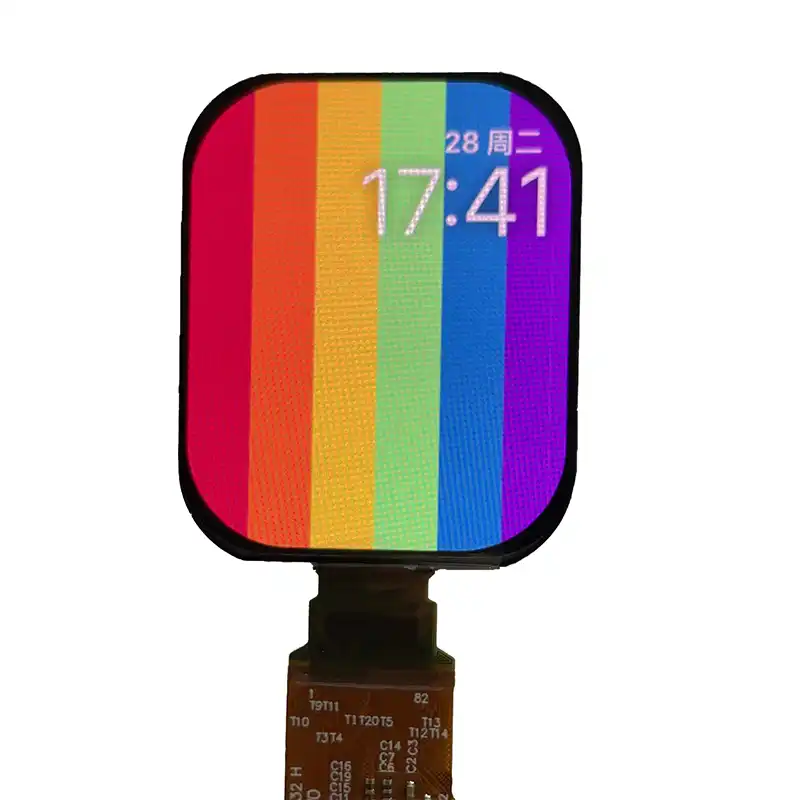 1.93 INCH OLED Panel I2C 368x448 Industrial-Grade Panel
Shenzhen Brownopto Technology’s 1.93-inch AMOLED module (Model BR193103-A1) features a core advantag
-
 1.38 INCH AMOLED Type 128x400 Low Power Wearable Display
Shenzhen Brownopto 1.38-inch AMOLED module: 128×400 resolution, 600-nit brightness, MIPI/QSPI/SPI in
-
 1.43 INCH Circular OLED 466x466 MIPI for Smartwatches/Industrial
1.43-inch AMOLED displayThe 1.43-inch AMOLED circular display module is designed for compact smart d
-
 4.3 inch IPS TFT LCD Screen without Touchscreen
BR043RHI0728-A3 V.1 IntroductionThis is a 4.3-inch (diagonal) LCD display, adopting a-Si TFT active
-
 3.5 inch IPS TFT LCD Displays without Touchscreen
BR035QHH0626-A3 V.1 IntroductionThe 035QHI0626-A3 V.1 product is a high-resolution transmissive type
-
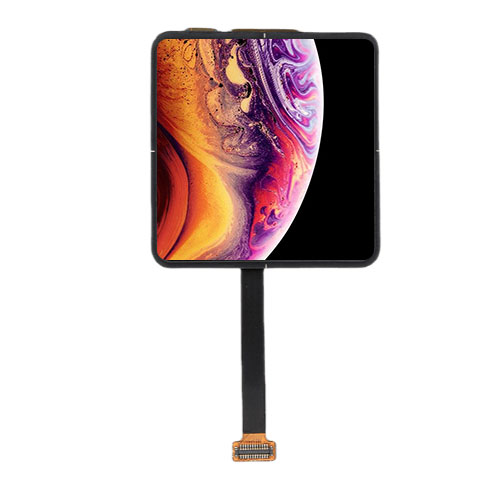 2.0-Inch Square HD OLED AMOLED Module 460 X 460 QSPI Interface
2.0" AMOLED Display Module with QSPI Interface for Industrial and Embedded SystemsCore Specification