en
en bel
bel de
de fil
fil fin
fin fra
fra hi
hi id
id it
it jp
jp kor
kor nl
nl pl
pl pt
pt swe
swe tr
tr
A BROWNOPTO Engineering Case Study with MedTech Innovations Inc.
Client: MedTech Innovations Inc. — a U.S.-based innovator in point-of-care (POC) diagnostic systems
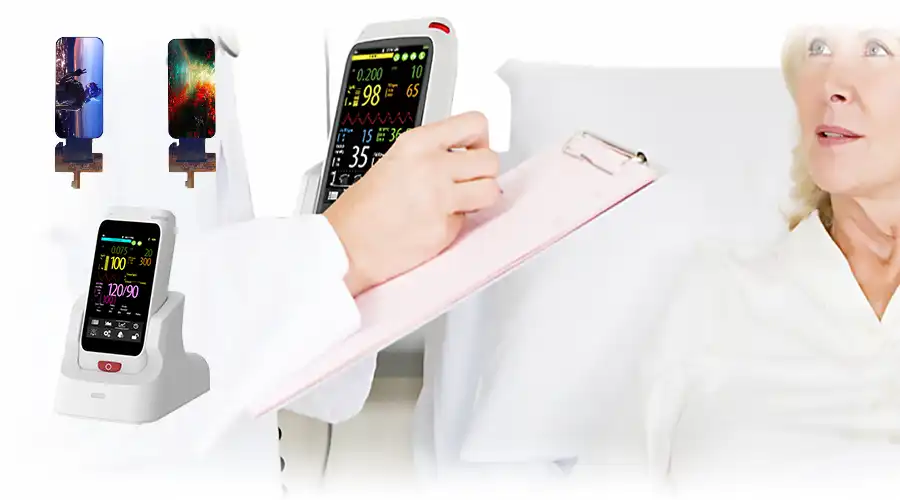
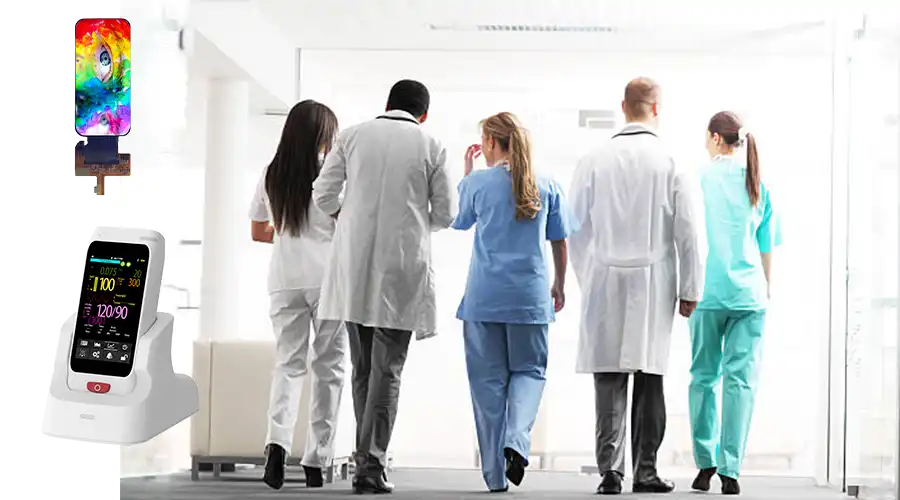
Application: Portable Blood Chemistry Analyzer for Emergency & Rural Healthcare
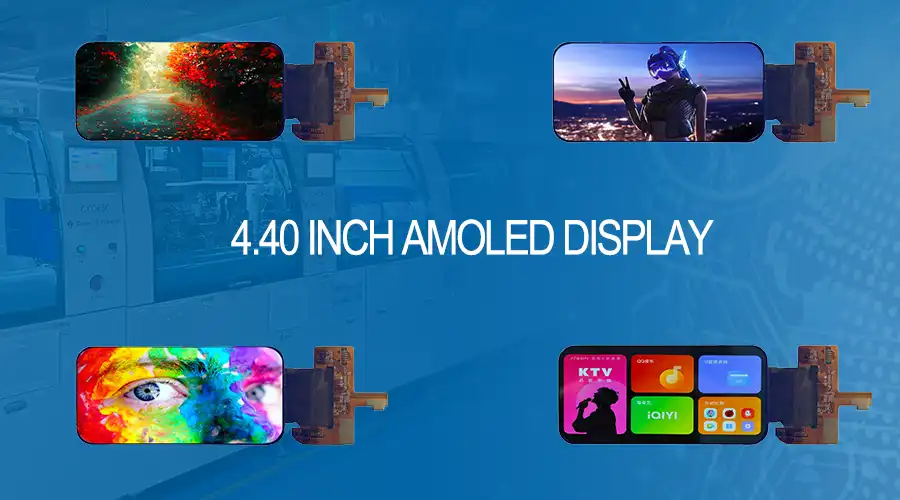
BROWNOPTO Product: Custom 4.40" On-Cell Touch LTPS AMOLED Display Module (Model: BR440102-A1)
Interface: MIPI DSI 2-lane, 60Hz refresh rate
Project Background & Technical Challenges
MedTech Innovations sought to replace the legacy LCD in its flagship handheld blood analyzer with a next-generation display that could meet the stringent demands of clinical and field environments. The device is used by paramedics, lab technicians, and rural health workers—often in uncontrolled lighting, temperature, and humidity conditions.
The core display requirements included:
Sunlight readability: Minimum 600 nits brightness with anti-reflective (AR) treatment to ensure legibility under direct sunlight (≥100,000 lux).
Robustesse environnementale :Fonctionnement stable dans une plage de températures ambiantes de -20°C à +70°C et une humidité relative de 95 % (sans condensation).
Facteurs humains :Tactile capacitif compatible avec les gants, rejet des doigts mouillés et faible latence (<20 ms).
Facteur de forme :Épaisseur du module ≤ 0,8 mm pour permettre un châssis portable plus fin et plus ergonomique.
Conformité réglementaire :Respect total des normes RoHS 2.0 (2015/863/UE), REACH (SVHC < 0,1 %) et des normes relatives aux matériaux sans halogène (HF) pour les équipements médicaux.
Fiabilité à long terme :Plus de 50 000 heures de durée de vie opérationnelle avec une dégradation minimale de la luminance.
Les écrans AMOLED disponibles sur le marché ne répondaient pas aux exigences de durabilité mécanique et de constance optique requises pour les dispositifs médicaux de classe II. MedTech avait besoin d'un partenaire capable de co-développement, et non pas seulement d'un fournisseur.
Solution d'affichage AMOLED co-conçue par BROWNOPTO
BROWNOPTO a participé à un programme de développement conjoint de six mois avec les équipes matérielles et logicielles de MedTech. Cette collaboration a porté sur la conception optique, l'intégration mécanique, la validation électrique et la documentation réglementaire.
Les principales étapes d'ingénierie ont inclus :
Optimisation de la pile optique :Intégration d'un polariseur hybride HC (Hard Coat) + AR pour réduire la réflectance de surface à <1,5% tout en maintenant la résistance aux rayures (dureté crayon ≥3H).
Intégration tactile sur cellule :Réglage personnalisé du firmware du contrôleur tactile CST3530 pour prendre en charge l'entrée des doigts gantés de 5 mm et rejeter les faux déclenchements dus à l'humidité ou au contact de la paume.
Gestion thermique :Mise en œuvre d'un circuit imprimé flexible (FPC) à faible dilatation thermique pour éviter le délaminage lors des cycles thermiques.
Séquençage de l'alimentation :Conception conjointe du timing d'allumage/d'extinction de l'écran avec le PMIC de MedTech afin d'éliminer le scintillement de l'écran pendant le démarrage.
Calibrage des couleurs :Calibrage gamma et point blanc effectué en usine (D65, gamma 2,2) pour assurer un rendu précis des éléments d'interface utilisateur médicale (par exemple, icônes d'avertissement, graphiques de tendance).
Spécifications techniques
| Paramètre | Spécification | Norme de validation |
|---|---|---|
| Type d'affichage | Écran AMOLED LTPS de 4,40 pouces | — |
| Zone active | 54,3 × 115,8 mm | — |
| Résolution | 568 × 1210 pixels (Full HD+) | Densité de pixels : 296 ppp |
| Luminosité | 600 nits (valeur typique), 800 nits (valeur maximale) | Mesuré selon la norme ISO 13406-2 |
| Rapport de contraste | 100 000:1 (typique) | Infini dans l'obscurité |
| Technologie tactile | Condensateur capacitif intégré (circuit intégré CST3530) | Compatible avec le multitouch à 10 points |
| Angle de vision | ≥85° (toutes directions) | ΔE < 5 à 80° |
| Épaisseur du module | 0,75 mm (hors FPC) | — |
| Interface | MIPI DSI 2 voies, 60 Hz | Conforme à la norme MIPI Alliance v1.3 |
| Température de fonctionnement | -20°C à +70°C | CEI 60068-2-1 / -2-2 |
| Température de stockage | -30°C à +80°C | — |
| Conformité | RoHS 2.0, REACH, HF, ISO 10993-5 (test de cytotoxicité) | Déclaration complète des matériaux disponible |
Validation & Field Performance
Le module BR440102-A1 a subi une validation rigoureuse dans les installations de BROWNOPTO et de MedTech :
Tests environnementaux :A passé 240 heures de cycles de température haute/basse (-20°C ↔ +70°C) et 96 heures d'exposition à une humidité relative de 95% sans délamination ni mura.
Robustesse mécanique :A survécu à 3 chutes de 1,2 m sur du contreplaqué (conformément à la norme IEC 60601-1-11) sans défaillance fonctionnelle.
Cohérence optique :Uniformité de luminance >85% sur l'ensemble du panneau ; décalage de couleur (Δu'v') < 0,01 sous variation de l'angle de vision.
Projet pilote clinique :Déployé dans 500 unités réparties dans 12 agences de services médicaux d'urgence (EMS) américaines sur une période de 12 mois – aucun dysfonctionnement sur le terrain lié à l'affichage n'a été signalé.
« BROWNOPTO ne s'est pas contenté de fournir un écran ; l'entreprise s'est pleinement intégrée à notre processus de lancement de nouveaux produits. Son équipe d'ingénieurs a résolu les problèmes de bruit tactile auxquels nous étions confrontés depuis des mois et a veillé à ce que l'écran AMOLED réponde aux exigences de la FDA en matière de documentation relative à la traçabilité des matériaux. Ce partenariat a été déterminant pour le lancement de notre produit. »
— Ingénieur principal en systèmes matériels, MedTech Innovations Inc.
Pourquoi les écrans AMOLED BROWNOPTO excellent dans les applications médicales
L'approche de BROWNOPTO va au-delà de la simple fourniture de composants. Nous proposons une ingénierie d'affichage complète pour les applications critiques :
Conception axée sur l'application :Des écrans conçus pour une utilisation réelle, et pas seulement pour répondre aux spécifications techniques.
Intégration verticale :Revêtement optique, intégration tactile et tests de fiabilité réalisés en interne.
Soutien réglementaire :Documentation complète de conformité des matériaux (RoHS, REACH, HF, ISO 10993) pour les soumissions de dispositifs médicaux.
NPI évolutif :Du prototype à la production en série avec une qualité constante (PPM < 50).
Soutien mondial :Des équipes d'ingénieurs en Asie, en Amérique du Nord et en Europe pour une intervention rapide.
Prêt à intégrer un écran AMOLED haute fiabilité dans votre appareil médical, industriel ou de défense ?
Contactez BROWNOPTOpour une consultation personnalisée en matière d'affichage — conçu pour la performance, construit pour la fiabilité.
FAQ
Quelles sont les causes du burn-in OLED et comment peut-il être évité ?
La brûlure d'écran se produit lorsque les matériaux organiques se dégradent de manière inégale en raison de l'affichage prolongé d'images statiques. Pour la prévenir, utilisez la gradation automatique, la mise en veille prolongée de l'écran, le décalage des pixels, la gradation du logo et évitez une luminosité élevée pour les contenus statiques.
Les écrans OLED sont-ils adaptés aux environnements extérieurs ou à haute luminosité ?
Les OLED standards ont du mal à résister à la lumière directe du soleil en raison d'une luminosité maximale limitée. Cependant, certains modèles offrent une luminosité plus élevée et un traitement antireflet. Pour une utilisation en extérieur, pensez aux Mini-LED ou aux OLED haute luminosité spécialisées.
Quelle est la durée de vie moyenne des écrans OLED ?
La durée de vie des écrans OLED est généralement estimée entre 30 000 et 100 000 heures pour une luminosité de 50 % (L50). Elle dépend des habitudes d'utilisation, de la luminosité et de la température de fonctionnement. Les pixels bleus se dégradent plus rapidement, ce qui peut entraîner une modification de la balance des blancs au fil du temps.
Les OLED peuvent-ils être utilisés pour les écrans toujours allumés (AOD) ?
Oui, les OLED sont idéales pour l'affichage AOD grâce à leur faible consommation d'énergie lors de l'affichage de thèmes sombres ou de petites icônes. Pour réduire le risque de brûlure, privilégiez le positionnement dynamique, une faible luminosité et limitez les pixels actifs.
Quelle est la différence entre AMOLED et PMOLED ?
L'AMOLED (OLED à matrice active) utilise un fond de panier TFT pour un rafraîchissement rapide et des résolutions élevées, idéal pour les smartphones et les objets connectés. Le PMOLED (OLED à matrice passive) pilote directement les lignes/colonnes, ce qui le rend idéal pour les écrans plus petits, plus simples et plus économiques.
Les écrans OLED prennent-ils en charge la fonctionnalité tactile ?
Oui, la plupart des modules OLED intègrent des couches tactiles capacitives (PCAP) ou résistives. Les OLED flexibles sont souvent associés à des capteurs tactiles incurvés pour des conceptions portables et automobiles fluides.
Derniers articles
-
Pourquoi les écrans AMOLED de 1 à 2 pouces sont essentiels à la réalité augmentée et à la réalité étendue en 2025
Pourquoi les écrans AMOLED de 1 à 2 pouces deviennent essentiels dans l'essor de la RA/XR (Perspectives du secteur 2025)
-
Understanding OLED Display Technology: Principles, Performance & Applications
OLED (Organic Light Emitting Diode) displays are a class of self-emissive display technology in whic
-
From Wearables to AR Glasses – How OLED Displays Are Redefining Visual Experiences in 2025
By 2025, OLED (Organic Light-Emitting Diode) technology has transitioned from luxury smartphone disp
-
Écrans LCD à barres étirées pour la vente au détail : dynamisez les ventes et l'engagement dans les supermarchés
Découvrez comment les écrans LCD à barres étirées améliorent le marketing en rayon des supermarchés, stimulent les ventes et réduisent
-
Solutions LCD extensibles pour restaurants et établissements d'accueil
Les écrans LCD étirés offrent des écrans élégants et haute luminosité, parfaits pour les menus des restaurants et les services d'accueil.